
How Oil Well Investments Work: From the Drill Bit to Your Monthly Distribution
If you’ve never held a working interest in an oil well, the process can feel opaque — which is exactly how bad actors prefer it. Our approach is the opposite. Every investor who works with us gets a clear explanation of every phase of the investment lifecycle before they commit a dollar. This page is that explanation: what happens when the drill bit enters the earth, what happens when the well starts producing, and what you receive throughout the life of the program.
Phase 1: Pre-Investment Due Diligence (Weeks 1–4)
This page covers the operational lifecycle. For the tax mechanics that make the investment financially compelling — particularly the intangible drilling costs deduction and the oil depletion allowance — those topics have dedicated pages. For an honest look at how oil well investment compares to the real estate strategies most of our investors are already using, see oil investments vs real estate.
The investment begins before you sign anything. Our due diligence process — and yours — happens here.
On our side: we’ve already evaluated the operator’s Texas RRC production history, reviewed the independent reserve engineer’s report, analyzed the formation geology against comparable offset wells, negotiated program terms, and assessed the fee structure. By the time a program reaches our investor community, it has passed our internal evaluation.
On your side: you receive our investment package and the PPM. You read both. You verify the operator’s RRC history yourself. You share the tax analysis with your CPA. You confirm how the program fits your overall investment strategy. If you have questions, you ask them before you sign — not after. See our invest in Texas oil wells page for the complete due diligence checklist.
Phase 2: Subscription and Funding
Once you’ve completed due diligence, the subscription process begins. You execute the subscription agreement and accredited investor questionnaire. For 506(c) programs, you provide accreditation verification documentation — typically a CPA letter, financial statements, or a verification service letter.
Your capital is wired to an escrow account designated in the subscription documents. Most programs hold capital in escrow until minimum subscription is reached — typically 60–75% of the program’s total raise. Once the minimum is met, escrow releases, the AFE is authorized, and the operator contracts the rig.
For year-end programs where you’re investing for a specific tax year IDC deduction: the subscription deadline, the escrow release, and the confirmed spud date all matter. We manage this timeline actively and communicate deadlines clearly. You should fund capital no later than mid-December for December programs.
Phase 3: Drilling
A modern Permian Basin horizontal well takes 15–30 days to drill to total depth (TD). During this phase, the drill string extends vertically to the target depth (typically 8,000–12,000 feet), then turns horizontally and drills a lateral of 7,500–12,000 feet through the target formation.
Intangible Drilling Cost expenses are incurred primarily during this phase. The drilling rig day rate, fuel, drilling fluid systems, directional drilling services, and cementing are all IDC-eligible as they’re consumed. This is the phase that generates the Year 1 tax deduction — and it’s why the spud date (the date drilling physically commences) is the controlling tax event.
You receive updates on drilling progress per the terms of the operating agreement — typically weekly status reports during active drilling. If any significant geological or mechanical issue is encountered that affects costs or timeline, we communicate it promptly. See oil & gas tax deductions for the full tax treatment.
Phase 4: Completion and Hydraulic Fracturing
After the drill string reaches total depth, the completion phase begins. Completion is the most capital-intensive phase for many horizontal programs — fracturing service costs, fluid, and proppant can equal or exceed drilling costs. Completion IDC-eligible expenses (fluid, pumping services, chemicals) represent a substantial portion of the total IDC deduction.
- Casing and cementing: Steel casing is run into the wellbore and cemented in place, isolating productive zones from surrounding formations and protecting groundwater.
- Perforation: The casing is perforated at designated intervals (frac stages) using explosive-shaped charges run downhole on wireline.
- Hydraulic fracturing: High-pressure fluid — primarily water mixed with proppant (finely graded sand) — is pumped into each stage to fracture the formation rock. Modern Permian Basin horizontal wells have 30–50+ frac stages. Fractures create permeable pathways for oil to flow from the formation into the wellbore.
- Flowback: After fracturing is complete, the well is put on flowback to recover fracturing fluids. Initial oil production begins during this phase.
Phase 5: First Production and Division Order
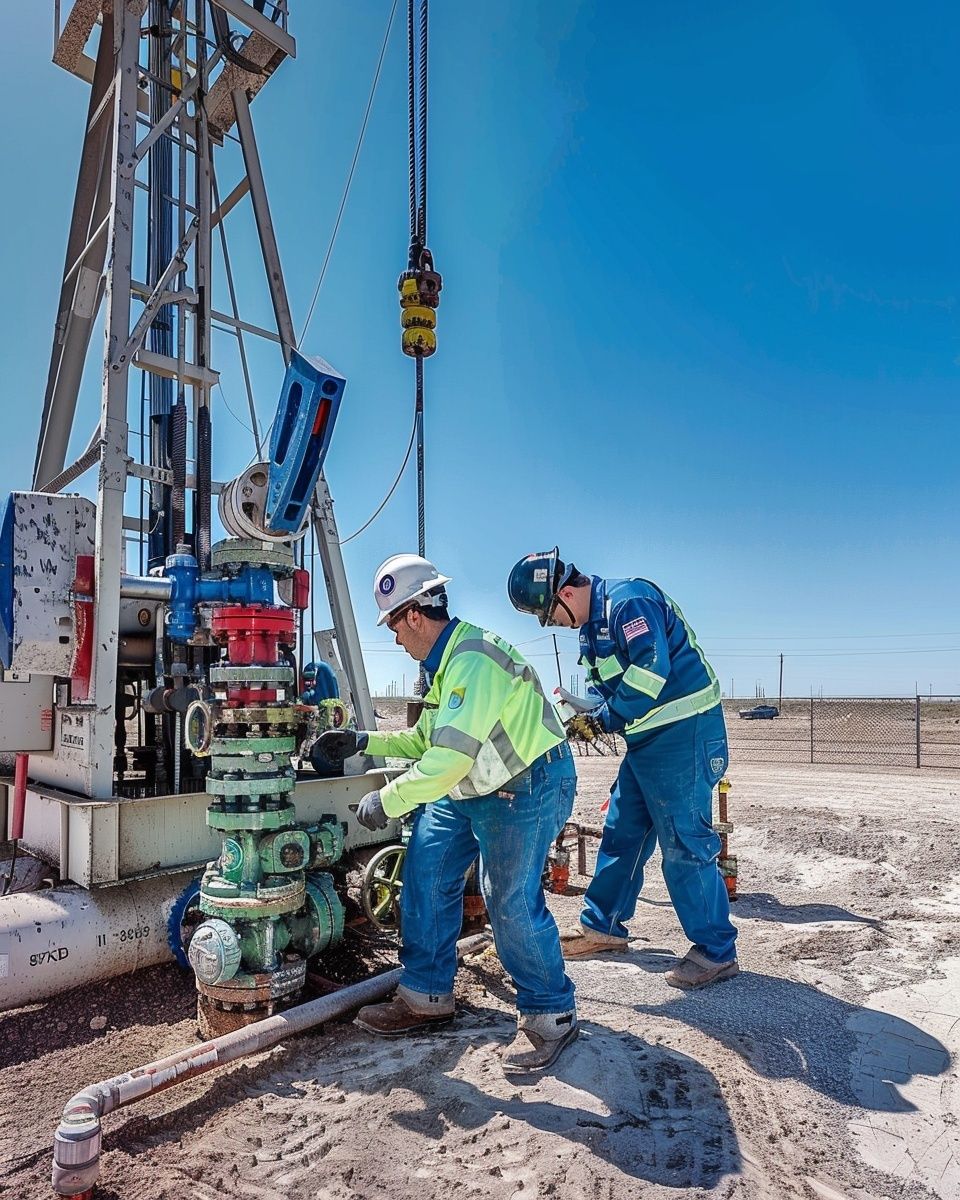
Once the well is completed and flowing, the operator prepares a division order — the legal document that establishes each party’s exact Net Revenue Interest in the well. The division order is submitted to the oil purchaser (the company buying the crude), which begins remitting payment to each interest owner based on their NRI percentage.
The time from spud to first check is typically 60–120 days — 15–30 days of drilling, 30–60 days of completion, and 15–30 days from first production to the first distribution check. We communicate first production milestones and expected first distribution timing throughout this phase.
First production rates are typically the highest the well will ever achieve. Initial production (IP) rates in Permian Basin horizontal wells can range from under 300 BOE/day for lower-performing wells to 1,500+ BOE/day in the strongest formation areas. The IP rate sets the revenue trajectory for the investment — and it declines from day one. See oil well returns explained for the revenue mechanics.
Phase 6: Ongoing Production and Monthly Distributions
Once in production, your investment enters its long-term phase. For the detailed mechanics of how monthly revenue is calculated — NRI formula, LOE components, and production decline profile — see our oil well returns explained and passive income from oil wells pages.
- Monthly distributions: Revenue checks or ACH deposits arriving 30–60 days after each production month, reflecting your NRI revenue share net of operating expenses. We provide monthly statements showing production volumes, realized prices, LOE breakdown, and net distribution.
- Annual K-1: Your Schedule K-1 arrives before tax filing deadlines for the production year, itemizing all income, IDC deductions, depletion, TDC depreciation, and any other tax items from the program. This is the document your CPA uses to complete your return.
- Periodic operational updates: We provide quarterly operational updates on well performance relative to type curve, any LOE trends, and any material events affecting the program.
Phase 7: Long-Term Production and Potential Workovers
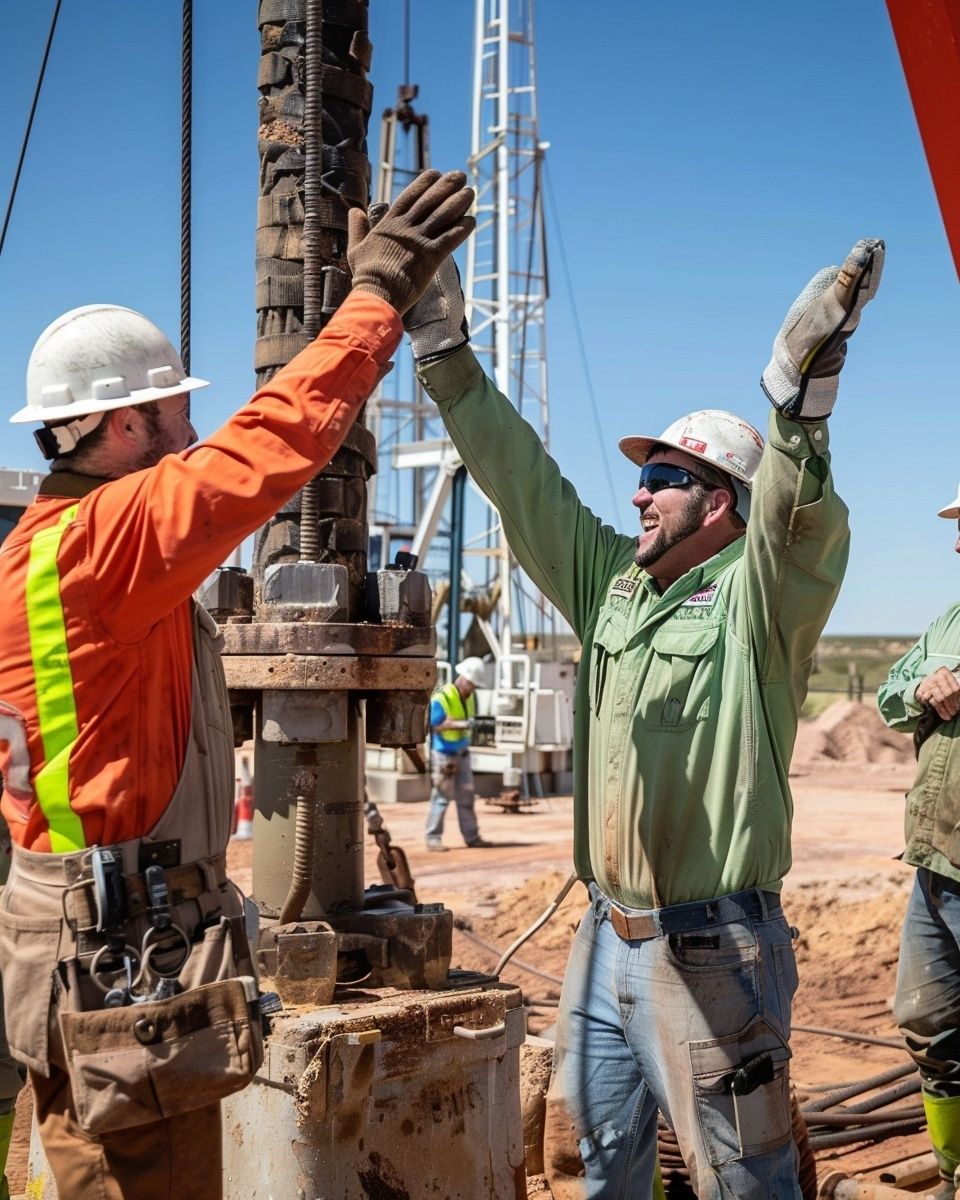
Over the life of the well — which may extend 20–30 years — production declines following the natural hyperbolic decline curve. As the well matures, operating costs may rise (particularly saltwater disposal as water cut increases) while production revenue declines. Most wells remain economically viable for many years at the lower terminal decline rate.
At some point during the well’s life, the operator may identify a workover opportunity — reperforating new zones, recompleting a different formation, or mechanical repair — that can restore or enhance production. Workovers generate additional costs (potential cash calls) but can extend the well’s economic life significantly. Compare structures in our royalty vs working interest guide.
Frequently Asked Questions
What happens if the oil well is a dry hole?
You lose the production income component — no oil means no monthly distributions. However, your IDC deduction is fully preserved regardless of production outcome. The <ExtLink href={EXT.IRC_263C}>§263(c)</ExtLink> deduction attaches to drilling costs incurred, not to production. A dry hole that costs $2 million to drill generates the same IDC deduction as a successful $2 million well. TDC bonus depreciation treatment for dry holes requires separate analysis — consult your CPA.
Can I sell my working interest if I need liquidity?
Working interests in private programs can be transferred but have no liquid secondary market. Any transfer requires operator consent per the operating agreement and appropriate securities law compliance. These investments should be treated as illiquid for planning purposes. The production distributions and tax benefits are the return mechanism — not a capital event at a defined date.
What is a cash call in an oil investment?
A cash call is a capital contribution request from the operator beyond your original investment, covering your proportionate share of costs that exceed the AFE estimate. Common triggers: drilling cost overruns (10–15% variance is normal), workover or recompletion operations on existing wells, or unexpected mechanical issues. Review the operating agreement’s cash call cap provisions before investing — legitimate programs limit your total additional capital exposure, typically at 10–20% above the original AFE.
What is the difference between a development well and an exploratory well?
Development wells are drilled in proven producing areas with extensive offset data — the geological outcome (whether oil is present) is known with high confidence. Dry hole risk: typically 5–10% in core Permian Basin development areas. Exploratory wells (wildcats) test whether oil exists at a new location with no nearby production history — dry hole risk can be 30–60% or higher. All Texas Oil Investments programs are development wells in proven Permian Basin formation areas.
How long does it take to receive my first distribution?
First distributions typically begin 4–7 months after investment: drilling (15–25 days), hydraulic fracturing completion (15–30 days), flowback and testing (30–45 days), pipeline tie-in and first oil sales (30–60 days), then first monthly distribution. A November investment typically generates a first check in April–June of the following year.
Understanding Your Monthly Distribution Statement
Every month after production begins, you receive a distribution statement — the document that shows exactly how much you earned, what was deducted, and what your net check amount is. Understanding each line item is essential for tracking your investment’s performance and verifying that operator-reported figures are accurate.
- Gross production volume: Total barrels of oil equivalent (BOE) produced by the well during the month. You can verify this independently against the RRC database once it's posted (typically 60–90 days after the production month).
- Realized oil price: The actual price per barrel the operator received for your oil during the month — not WTI benchmark, but the posted price minus any basis differential and transportation deduction. Core Permian Basin wells typically realize WTI minus $1–$3.
- Gross revenue: Production volume × realized price. This is the total revenue before any deductions.
- Your Net Revenue Interest (NRI): Your working interest percentage minus the royalty burden. If you own 5% WI and the royalty burden is 25%, your NRI is 3.75% (5% × 75%). Your share of gross revenue = gross revenue × your NRI.
- Lease Operating Expenses (LOE): Your proportionate share of monthly operating costs — artificial lift electricity, well maintenance, saltwater disposal, chemical treatments, insurance, and field supervision. LOE typically runs $5–$12 per BOE in Permian Basin horizontals, rising as wells mature and water production increases.
- Severance and ad valorem taxes: Texas levies a 4.6% severance tax on oil production, deducted at the wellhead. Ad valorem (property) taxes on the mineral interest are also assessed annually.
- Net distribution: Gross revenue × NRI − LOE − taxes = your monthly check. This is the number that hits your bank account.
Investment Lifecycle Overview
The complete oil well investment lifecycle from your initial capital commitment through decades of monthly production income.
Oil Well Investment Lifecycle
From capital deployment to monthly production income
1
Due Diligence & Subscription
Weeks 1–4
Review PPM, verify operator RRC history, sign subscription docs, wire capital
2
Drilling
Weeks 5–10
Rig mobilization, spud date (controls tax year), drill to target depth, log formations
3
Completion & Fracturing
Weeks 11–16
Casing, cementing, hydraulic fracturing, flowback, and initial production test
4
First Production
Months 4–6
Division order executed, first oil sales, production data reported to RRC
5
Monthly Distributions
Month 6+
Monthly revenue check: Production × WTI Price × NRI – LOE = Your Distribution
6
Decline & Long-Term Income
Years 2–20+
Natural decline curve: 40–60% Year 1, flattening to 8–15% terminal decline
The Non-Operator's Role: What You Do and Don't Control
You own a legal fractional interest in the lease — a property right that entitles you to your proportionate share of production revenue. But you do not make operational decisions. The operator decides when to drill, how to design the completion, which service companies to hire, and how to manage daily production operations. You are an ownership partner, not an operational participant. This structure is by design. Operators have the geological expertise, equipment relationships, regulatory relationships, and field management infrastructure that individual investors do not. The working interest structure lets investors access oil production economics without needing to replicate those capabilities. The tradeoff is that you have limited influence over operational decisions — which is why evaluating the operator’s track record before investing is more important than any other due diligence step.
Disclaimer
The information on this page is for educational purposes only and does not constitute investment advice, tax advice, or legal advice. Oil and gas working interest investments involve significant risks including commodity price volatility, geological risk, operational risk, and potential loss of entire invested capital. All tax benefit descriptions reference IRC provisions as currently in effect; tax law is subject to change and individual tax treatment varies. All dollar examples and projections are illustrative only — not representations of actual returns. Programs are offered exclusively to verified accredited investors as defined by SEC Rule 501, under SEC Regulation D Rule 506(b). This page does not constitute an offer to sell or solicitation of an offer to buy any security. Consult a qualified CPA, attorney, and financial advisor before making any investment decision.
Request Your Program Overview
Complete this 60-second form to receive our current investment program details.
By requesting information, you represent that you believe you qualify as an accredited investor as defined by SEC Rule 501. This is not an offer to sell or solicitation to buy any security. Programs available only to verified accredited investors under SEC Regulation D Rule 506(b). No obligation to invest.
Accredited Investors Only · No Obligation
Discover If You Qualify for Our Current Program
Complete our 60-second investor questionnaire to receive our program overview.
By requesting information, you represent that you believe you qualify as an accredited investor as defined by SEC Rule 501. This is not an offer to sell or solicitation to buy any security. Programs available only to verified accredited investors under SEC Regulation D Rule 506(b). No obligation to invest.