
Permian Basin Oil Investments: The Regional Investor’s Deep Dive
Our primary operating focus is the Permian Basin for reasons that compound across every dimension of what makes an oil investment work. This page is the operational and geological deep dive — the formations, the sub-basins, the infrastructure, the well mechanics, and what the Texas regulatory environment provides to investors that no other producing state can match.
Share of U.S. Crude
2026 Projected Output
Stacked Formations
Texas State Income Tax
The Permian Basin Geological Advantage
The Permian Basin’s geological advantage over every other domestic basin is the stacked pay column. This is not a marginal difference — it is the structural reason why the Permian has produced more cumulative oil than any basin in North American history. For the investor-facing case — investment structures, tax provisions, minimum investments, and the subscription process — see our Permian Basin investment opportunities page. This page is about understanding the ground beneath your investment.
- Wolfcamp A & B: The workhorse Permian formation. The most extensively drilled tight carbonate in the U.S., with millions of data points across hundreds of thousands of wells. Strong initial production, predictable decline curves.
- Spraberry: Silty carbonate in the upper section of the Midland Basin's productive column. Often co-developed with Wolfcamp in multi-zone programs. Well-understood formation with decades of production history.
- Dean: Sandstone formation between the Wolfcamp and Spraberry that provides additional productive zones in select Midland Basin areas.
- Bone Spring (Delaware): Three-member formation in the Delaware Basin that produces oil, NGLs, and natural gas. Delaware Basin programs typically target multiple Bone Spring intervals alongside Wolfcamp.
- Avalon & Delaware Sand: Carbonate and sandstone formations in the Delaware Basin that provide additional stacking targets in select acreage positions.
Midland Basin vs. Delaware Basin: What the Distinction Means to Investors
Our programs currently concentrate in the Midland Basin, where the density of offset production data allows us to generate more reliable pre-drill production estimates than in areas with limited development history. We evaluate Delaware Basin opportunities on a program-by-program basis.
| Factor | Midland Basin | Delaware Basin |
|---|---|---|
| Primary location | Eastern Permian: Midland, Martin, Glasscock, Howard counties | Western Permian: Reeves, Loving, Ward, Culberson counties |
| Primary formations | Wolfcamp A/B, Spraberry, Dean, Clear Fork | Bone Spring (3 members), Wolfcamp, Delaware, Avalon |
| Development maturity | More mature — extensive offset production data | Active expansion — newer development areas |
| Infrastructure | Highly developed — lower midstream cost | Expanding — some takeaway constraints remain |
| Water cut | Varies — mature areas have higher water production | Variable — some areas high water cut |
| Geological risk | Lower — formation characteristics well understood | Moderate — some zones still delineating |
Illustrative example only. Actual tax savings and investment returns depend on individual circumstances including tax bracket, AMT exposure, state tax treatment, program structure, and well performance. Not a projection or guarantee of results. Consult a qualified CPA before making any investment decision.
Permian Basin Hydraulic Fracturing: The Technology That Changed Everything
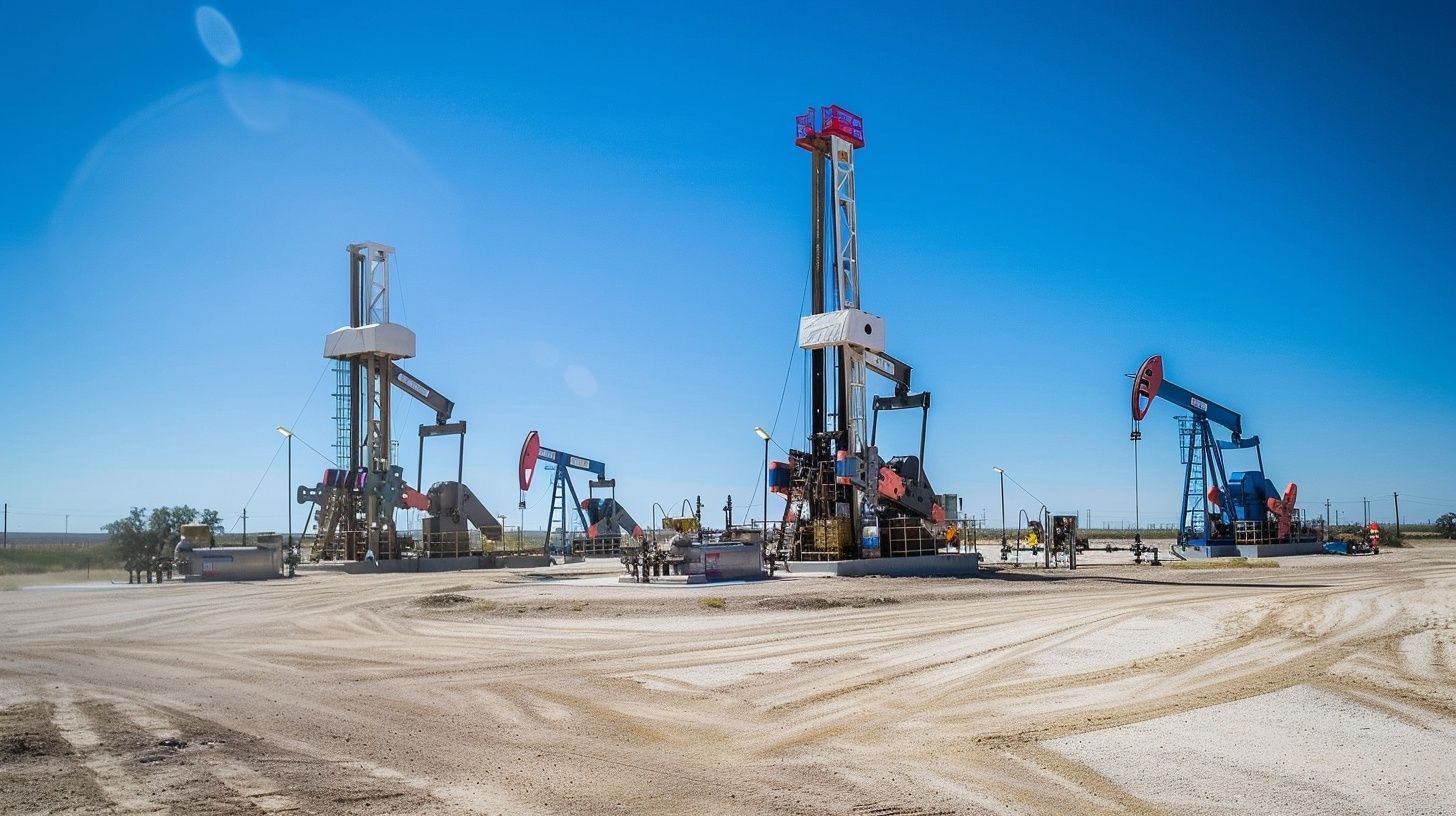
A modern Permian Basin horizontal well is drilled vertically to a depth of 8,000–12,000 feet, then curves 90 degrees to drill horizontally through the target formation for a lateral length of 7,500–12,000+ feet. After drilling, the well is completed using hydraulic fracturing: high-pressure fluid mixed with proppant is pumped into the wellbore in 30–50+ sequential stages. Completion design — frac stage spacing, fluid volume, proppant loading — is one of the primary variables operators can control to optimize well performance. See how oil well investments work for the full lifecycle.
Texas Railroad Commission: Your Independent Verification Tool
The Texas Railroad Commission maintains a publicly accessible database of every oil and gas well ever drilled in Texas — permits, production volumes, operator filings, compliance records, and bond status. No legitimate operator will object to this verification. An operator who discourages you from checking the RRC database is an operator you should not fund.
- Go to rrc.texas.gov → click Data & Statistics → Production Data Query System
- Search by operator name to pull every well they've drilled in Texas
- Filter by county and formation to find comparable offset wells
- Review monthly production volumes — look for consistent performance, not cherry-picked wells
- Check operator compliance history and bond status under the Operator search
- Cross-reference with the program's independent reserve engineer report
- Identify the specific wells or formation areas described in the PPM — verify they exist
Permian Basin Infrastructure: Why Operating Costs Are Structurally Competitive
- Crude oil pipelines: The Permian Basin has the most developed crude takeaway infrastructure of any U.S. basin. Competition among pipelines compresses basis differentials — the discount Permian producers accept relative to WTI benchmark pricing.
- Natural gas processing: Associated natural gas from Permian oil wells is processed at established facilities, capturing NGLs that generate additional revenue. The Matterhorn Express Pipeline expanded gas takeaway capacity in 2024.
- Saltwater disposal: The Permian Basin's established SWD network is among the most competitive in the country on a per-barrel cost basis — critical because SWD is often the largest operating cost in mature wells.
- Power infrastructure: Most Permian Basin well locations have grid power access, allowing operators to run artificial lift systems at materially lower cost than diesel-generator alternatives.
Frequently Asked Questions
What makes the Permian Basin the best domestic oil investment region?
The Permian Basin combines: production scale (6.6 million BOE/day — 45% of U.S. output), Texas zero state income tax, the RRC’s publicly accessible production database for pre-investment operator verification, stacked pay geology reducing per-zone capital costs, and breakeven economics at $35–$50 WTI. No other domestic basin offers all five simultaneously.
What is the Wolfcamp formation and why do investors target it?
Wolfcamp is a Permian-age carbonate-rich shale at 7,500–11,000 feet depth in the Midland Basin. It is the most extensively drilled tight oil formation in U.S. history, with tens of thousands of wells providing decades of verified production history. Initial production rates in core Midland Basin counties average 1,100–1,300 BOE/day for Wolfcamp A horizontals. The geological question — is oil there? — is definitively answered.
How do I independently verify a Permian Basin operator before investing?
Access the Texas Railroad Commission at rrc.texas.gov. Search by operator name and county. Pull actual 12-month cumulative production for the operator’s comparable wells in the Wolfcamp A or B in the target county. Compare to their type curve projections. Operators whose actual wells consistently track at or above type curve demonstrate the execution quality that matters for investor returns.
What is the minimum investment for Permian Basin working interest programs?
Most private Permian Basin working interest programs have minimums of $50,000–$100,000 per unit. Programs with very low minimums typically involve less proven locations or smaller operators. Multi-unit participation is common for investors sizing to a specific tax deduction target. Texas Oil Investments partner programs start at $50,000 minimum.
Can I invest in the Permian Basin as an out-of-state accredited investor?
Yes. Private Permian Basin working interest programs are available to accredited investors nationwide through SEC Regulation D Rule 506(b) private placements. Your state of residence determines your state income tax treatment of the production income (most states exempt or credit Texas-sourced income, but verify with your CPA). The federal tax provisions — IDC deduction, active income treatment, depletion — apply regardless of where you live.
The Midland Basin Wolfcamp: A Geological Profile for Investors
The Wolfcamp Shale in the Midland Basin is a carbonate-rich organic shale deposited during the Wolfcampian stage of the Permian period, approximately 275–299 million years ago. It ranges from 7,500 to 11,000 feet in depth and extends across approximately 75,000 square miles of the Permian Basin — making it one of the largest petroleum-bearing formations in North America.
What makes the Wolfcamp uniquely well-suited for private investor programs is the combination of geological certainty and production data density. The Midland Basin alone has more than 15,000 horizontal Wolfcamp wells with documented production histories in the RRC database. When an operator drills a new Wolfcamp A well in Midland County, they are working in a formation where every geological question about oil presence, pressure, and producibility has been answered thousands of times by neighboring wells.
For investors, this translates to dramatically lower geological risk than frontier or developing formations. The primary risks in Midland Basin Wolfcamp development are operational (well execution, completion design) and market (commodity price), not geological (is oil there?). That risk profile — where the geological question is answered and execution is the variable — is the profile that makes development drilling appropriate for private investor capital.
The RRC Database as an Investor Due Diligence Tool
The Texas Railroad Commission’s public database (rrc.texas.gov) is the most powerful due diligence tool available to any private oil investor. Here is specifically how to use it for Permian Basin program evaluation:
- Operator production verification: Search the operator name under 'Well Record Search.' Filter by county (e.g., Midland, Martin, Glasscock) and formation (Wolfcamp). Pull the operator's actual 12-month cumulative production for their most recent 5–10 wells. Compare to the type curve they presented in their program materials.
- Well compliance records: Check whether the operator has any compliance violations, plugging orders, or environmental incidents on file. A clean RRC compliance record is a basic operator quality signal.
- Permit status: If investing in a program where the well has not yet been permitted, the permit application and approval process is tracked in the RRC database. Permitted wells have cleared the first regulatory hurdle.
- Production decline verification: For operators who have been drilling in the target county for 2+ years, you can pull their early wells (Year 1–2) alongside more mature wells (Year 3–5) to see whether their actual production decline matches industry norms — or whether early production was inflated by completion techniques that don't sustain.
Permian Basin Breakeven Economics: Why These Wells Survive Price Crashes
Breakeven economics — the WTI price at which a well generates enough revenue to cover its operating costs — is the single most important resilience metric for any oil investment. The Permian Basin’s core counties have among the lowest breakeven thresholds of any domestic producing region. This is not marketing. It is the structural result of high per-foot productivity, compressed midstream costs from infrastructure density, and decades of completion optimization across tens of thousands of wells.
- During the 2020 price collapse, Permian operators with core-county acreage maintained shut-in thresholds below $30 WTI — wells that were already drilled and completed continued producing because lifting costs alone were covered at prices that would have been catastrophic for higher-cost basins.
- Breakeven is not a fixed number. It shifts with service costs, water disposal rates, and completion efficiency. The figures above reflect 2025–2026 development economics for horizontal wells with modern completion designs.
- For investors, the practical question is: at what WTI price does my well stop generating positive cash flow after royalties, taxes, and LOE? In core Midland Basin Wolfcamp programs, that number is typically $28–$35 for wells that are already producing — meaning the well continues to pay distributions even in a significant price downturn.
| County / Area | Primary Formation | Approximate Breakeven (WTI) | Context |
|---|---|---|---|
| Midland County | Wolfcamp A | $35–$42/bbl | Most extensively drilled — highest data density in basin |
| Martin County | Wolfcamp A/B | $36–$44/bbl | Core development area with strong offset performance |
| Howard County | Wolfcamp A, Spraberry | $38–$45/bbl | Multi-zone development reduces per-well capital allocation |
| Glasscock County | Wolfcamp A/B | $37–$43/bbl | Southern Midland Basin — mature infrastructure |
| Reeves County (Delaware) | Bone Spring, Wolfcamp | $40–$50/bbl | Higher completion costs offset by strong IPs |
| Loving County (Delaware) | Wolfcamp, Bone Spring | $42–$50/bbl | Expanding infrastructure — takeaway improving |
Illustrative example only. Actual tax savings and investment returns depend on individual circumstances including tax bracket, AMT exposure, state tax treatment, program structure, and well performance. Not a projection or guarantee of results. Consult a qualified CPA before making any investment decision.
Understanding Permian Basin Production Decline Curves
Every oil well declines. This is not a risk factor that can be engineered away — it is the fundamental physics of reservoir pressure depletion. What matters for investors is the shape and rate of that decline, because it determines the revenue distribution timeline across the life of the investment.
A typical Midland Basin Wolfcamp A horizontal well follows a hyperbolic decline curve. Initial production (IP) rates in core counties average 800–1,300 BOE/day for the first 30 days. Production then declines steeply in Year 1 — typically 60–70% from the peak monthly rate. Years 2–3 see a further 25–35% annual decline. By Year 4–5, the decline rate flattens to 8–15% annually, and the well enters what operators call “tail production” — lower volumes, but at correspondingly lower operating costs because the expensive completion phase is long past.
The investor implication is direct: the majority of cumulative revenue from a Permian Basin well is generated in the first 36 months. A well that produces 150,000 BOE in its first three years may produce an additional 100,000–150,000 BOE over the following 15–20 years. The early cash flow is concentrated; the tail cash flow is extended. Both matter for total returns, but the Year 1–3 revenue is what drives the initial capital recovery and the effective return on the IDC deduction.
Operators who present “flat” production projections or show Year 5 volumes that are similar to Year 1 are either projecting from an unusually conservative IP or are not being transparent about decline. Ask for the type curve — and then verify it against actual offset well production in the RRC database. The data is there. Use it.
Permian Basin vs. Other Major U.S. Producing Basins
Investors evaluating oil and gas programs are not choosing between ‘oil investment’ and ‘no oil investment.’ They are choosing between basins — and the basin determines the regulatory environment, tax treatment, data transparency, infrastructure economics, and geological risk profile of the investment. Here is how the Permian compares to the other major domestic producing regions on the metrics that matter most to private investors.
- The Permian Basin is not the only viable investment basin. The Bakken, Eagle Ford, and SCOOP/STACK all have legitimate operators running credible programs. But no other basin matches the Permian across all five investor-critical dimensions simultaneously: zero state income tax, public RRC database access, sub-$45 breakeven economics, 4–8 stacked pay zones, and the deepest geological dataset in the Western Hemisphere.
- For a detailed analysis of each basin — geology, tax treatment, operator landscape, and investment structures — see our regional pages: Bakken Formation investments, Eagle Ford Shale investments, and SCOOP/STACK oil investments.
| Factor | Permian Basin (TX) | Bakken (ND) | Eagle Ford (TX) | SCOOP/STACK (OK) |
|---|---|---|---|---|
| State income tax | 0% | 1.1–2.9% | 0% | 0.25–4.75% |
| Public production database | RRC — free, real-time, unrestricted | NDIC — available but less granular | RRC — same as Permian | OCC — available, moderate detail |
| Breakeven WTI (core areas) | $35–$45 | $42–$52 | $38–$48 | $40–$50 |
| Infrastructure maturity | Most developed in U.S. | Mature but constrained in winter | Mature — declining new activity | Developing — some takeaway limits |
| Stacked pay zones | 4–8 zones | 1–2 zones | 1–2 zones | 2–4 zones |
| 2026 production share (U.S.) | ~45% | ~9% | ~8% | ~5% |
| Geological data density | Highest — 50,000+ horizontal wells | High — 15,000+ wells | High — 20,000+ wells | Moderate — 8,000+ wells |
Illustrative example only. Actual tax savings and investment returns depend on individual circumstances including tax bracket, AMT exposure, state tax treatment, program structure, and well performance. Not a projection or guarantee of results. Consult a qualified CPA before making any investment decision.
Common Investor Mistakes in Permian Basin Programs
We include this section because we have seen every one of these mistakes made by intelligent, sophisticated investors. The Permian Basin’s reputation as the premier U.S. oil investment region attracts both excellent operators and programs that rely on the basin’s name to sell investments that do not deserve the capital.
- Investing based on the basin name without verifying the specific acreage position. 'Permian Basin' covers 75,000 square miles. A well in core Midland County and a well in a fringe county 200 miles away are not the same investment. Demand the specific county, section, and formation — then pull offset well data from the RRC database for that exact area.
- Accepting operator-provided type curves without independent verification. Every operator presents their best-case production projection. Pull the operator's actual wells from the RRC and compare 12-month cumulative production to their type curve. If actual wells consistently underperform the marketing type curve by 20%+, that is a material disclosure issue.
- Ignoring the operator's compliance history. The RRC tracks violations, plugging orders, and environmental incidents. An operator with a clean compliance record across 50+ wells in the target county has demonstrated something that a glossy pitch deck cannot: consistent operational execution under regulatory oversight.
- Confusing gross revenue with net revenue to investor. Working interest programs have royalty burdens (typically 20–25%), severance taxes (~4.6% in Texas), and LOE that reduce gross wellhead revenue before the investor receives a distribution. A well producing $500,000 in gross revenue does not generate $500,000 for investors. Demand a clear net revenue interest (NRI) calculation.
- Underestimating the illiquidity timeline. There is no secondary market for working interests in private Permian Basin programs. Plan for a 5–10+ year hold with no ability to liquidate. If you need access to the capital within 3 years, this is not the right investment structure — regardless of how compelling the tax benefits appear.
How Texas Oil Investments Accesses Permian Basin Programs
Through our relationships with experienced Permian Basin energy sponsors and operators, Texas Oil Investments facilitates access to Wolfcamp development programs for accredited investors who meet our partner network’s eligibility criteria. We provide investors with education on Permian Basin geology and economics, guidance on using the RRC database for independent verification, and introductions to vetted energy sponsors who structure and manage the investments. We do not operate wells, manage the investment programs, or act as a broker-dealer. The operators and energy sponsors in our partner network bring the technical expertise — drilling engineering, completion design, production management — that determines well outcomes. Our role is to help accredited investors understand the opportunity and connect with experienced professionals in the Texas energy industry.
Disclaimer
The information on this page is for educational purposes only and does not constitute investment advice, tax advice, or legal advice. Oil and gas working interest investments involve significant risks including commodity price volatility, geological risk, operational risk, and potential loss of entire invested capital. All tax benefit descriptions reference IRC provisions as currently in effect; tax law is subject to change and individual tax treatment varies. All dollar examples and projections are illustrative only — not representations of actual returns. Programs are offered exclusively to verified accredited investors as defined by SEC Rule 501, under SEC Regulation D Rule 506(b). This page does not constitute an offer to sell or solicitation of an offer to buy any security. Consult a qualified CPA, attorney, and financial advisor before making any investment decision.
Request Your Program Overview
Complete this 60-second form to receive our current investment program details.
By requesting information, you represent that you believe you qualify as an accredited investor as defined by SEC Rule 501. This is not an offer to sell or solicitation to buy any security. Programs available only to verified accredited investors under SEC Regulation D Rule 506(b). No obligation to invest.
Accredited Investors Only · No Obligation
Discover If You Qualify for Our Current Program
Complete our 60-second investor questionnaire to receive our program overview.
By requesting information, you represent that you believe you qualify as an accredited investor as defined by SEC Rule 501. This is not an offer to sell or solicitation to buy any security. Programs available only to verified accredited investors under SEC Regulation D Rule 506(b). No obligation to invest.